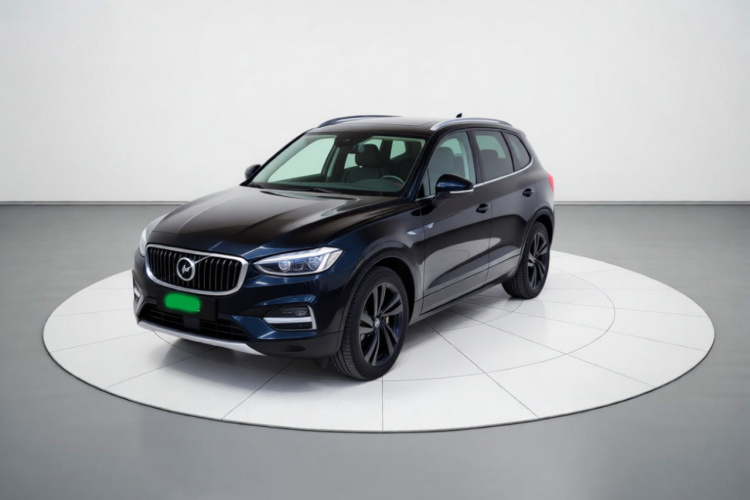
Every dealer sourcing used vehicles for Algeria, Morocco, or Egypt is now asking some version of the same question: how much of next year's inventory should be electric? The honest answer is not a single number — it depends on which country, which city, and which customer segment you're serving. Government targets across the region point firmly toward electrification, but the on-the-ground reality of charging infrastructure, import duties, and buyer habits still favors internal combustion engine (ICE) vehicles for most of the mass market. Getting the product mix wrong in either direction — overloading on EVs too early, or ignoring the shift entirely — is an expensive mistake. This article walks through what the data actually shows in each major North African market, and offers a practical framework for structuring inventory over the next 12–24 months.
Policy signals in North Africa are strong, even if adoption is still early. Morocco's government has set a target of 100,000 electric vehicles produced annually by 2025, with EVs expected to make up 60 percent of automotive exports by 2030. On the charging side, Morocco had around 1,000 public charging stations by late 2025, and private companies have committed $140 million to build 5,000 stations by 2028. The longer-term ambition is even bigger: by 2035, Morocco aims to build 25,000 charging stations to support an anticipated 2.5 million electric vehicles on its roads. Substack + 2
Algeria is moving in a similar direction, tying policy to domestic manufacturing rather than imports. The country is targeting electrification of 30 percent of its vehicle fleet by 2030, backed by subsidies, tax cuts, and expanding charging infrastructure, with roughly 1,000 public charging stations planned. On the production side, Geely has announced a $200 million assembly plant with 50,000-unit capacity aiming for its first model in 2026, and Chery is opening a factory in Bordj Bou Arreridj. Ev24Ev24
Egypt's approach centers on turning the country into a regional EV manufacturing hub rather than an import destination. The Cabinet's National Automotive Industry Development Program offers land-price refunds for plants that hit production targets, and includes an initiative to replace aging taxis and private cars with electric models. EV sales in Egypt grew by nearly 20 percent in 2025, though EVs still make up less than 1 percent of the total vehicle fleet, with government targets of 30 percent by 2030 and 50 percent by 2040. EgyptTodayEv24
The pattern across all three markets is consistent: governments are betting heavily on local EV assembly, not on flooding the market with imported electric vehicles. That distinction matters enormously for dealers, because it shapes which channel — new domestic production or imported used stock — will actually serve near-term demand.
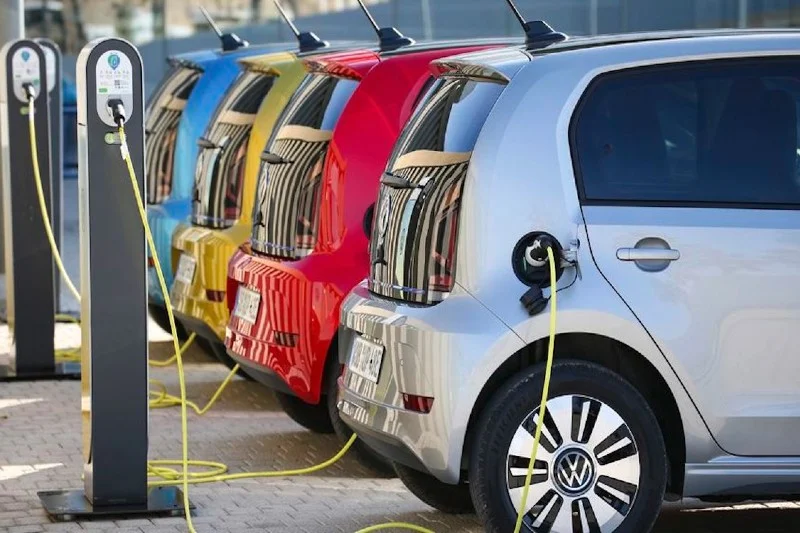
Policy targets are ambitious, but infrastructure has not caught up, and that gap is exactly where dealer risk lives. Morocco's charging network remains concentrated in major cities like Casablanca, Rabat, and Marrakech, and academic research on the market found that despite Morocco's significant automotive manufacturing capacity, domestic battery-electric vehicle market share sits at only about 0.6 percent, even after triple-digit percentage growth from a small base. Researchers point to financial, infrastructural, policy, and behavioral barriers all acting together, not just a single bottleneck.
Egypt shows a similar pattern: charging stations remain concentrated in Cairo and Alexandria, and while operators aim to expand toward roughly 1,000 stations, coverage outside major metro areas is still thin. Algeria's 1,000-station plan is likewise still in build-out phase, and for now, EV adoption there leans on a narrow mix of local prototypes, imported brands, and two-wheelers rather than a broad used-vehicle market.
For dealers, this means the addressable EV buyer today is overwhelmingly urban, income-qualified, and often has access to home or workplace charging — a real but narrow segment. Rural and secondary-city demand, which still makes up the bulk of used vehicle volume across Algeria, Morocco, and Egypt, remains squarely ICE and hybrid territory for the foreseeable future.
Import economics differ sharply by vehicle type and by country, and dealers who assume "EV equals lower duty everywhere" can lose money fast. Egypt is the clearest example of a market currently in transition: battery-electric vehicles classified under HS code 8703.80 face 0 percent customs duty, while standard petrol or diesel vehicles under 8703.20/30 face duties ranging from 40 to 135 percent. That gap has made imported EVs attractive on paper. But the government is actively reconsidering this structure — a 2026 customs reform is expected to introduce duties on imported EVs for the first time, specifically to push buyers toward locally assembled electric vehicles rather than imported ones. Dealers planning EV-heavy shipments to Egypt should treat current duty-free treatment as temporary, not a stable baseline.
Algeria's import rules add a different kind of friction: private buyers are limited to importing one used vehicle every three years, and any imported used vehicle — electric or otherwise — must be less than three years old, with mandatory safety features like ABS and speed limiters, plus a Certificate of Conformity, Technical Inspection Certificate, and Border Police Certificate. This age ceiling matters more for EVs than for ICE vehicles in practice, because battery degradation and evolving connector standards mean a three-year-old EV can already look dated to a buyer comparing it against domestically assembled new models from Geely or Chery entering the market around the same time.
For dealers working with CarX Global, this is where FOB-stage documentation discipline pays off directly: getting HS code classification, vehicle age, and conformity certificates correct before the vehicle leaves the departure port avoids costly reclassification disputes at the destination customs office — a problem that shows up disproportionately with hybrid and EV shipments, where classification between BEV, HEV, PHEV, and REEV categories is not always straightforward and carries very different duty outcomes.
Despite the infrastructure gap, there are concrete signs of where the market is heading, and dealers who ignore them entirely will miss real opportunity. Domestic EV assembly is the strongest signal: Geely and Chery's Algerian plants, and Egypt's push toward 500,000 locally produced electric cars annually by 2030, indicate that new-vehicle EV supply will grow substantially over the next few years — which in turn will eventually feed a secondary used-EV market that doesn't exist at scale yet.
Government fleet and taxi replacement programs are another leading indicator. Egypt's initiative to replace aging taxis and private vehicles with electric models creates a defined, policy-driven buyer segment that behaves differently from retail consumers — these are often fleet operators or cooperatives making bulk decisions, and they are more forgiving of charging limitations because routes and depot locations are fixed and predictable.
Hybrid vehicles occupy an underappreciated middle position in all three markets. They sidestep the charging-infrastructure problem entirely while still qualifying for at least partial policy incentives in most jurisdictions, and in Egypt specifically, hybrids sit in a distinct customs category from both full EVs and standard ICE vehicles, which can create pricing windows worth watching as the 2026 reform takes shape.
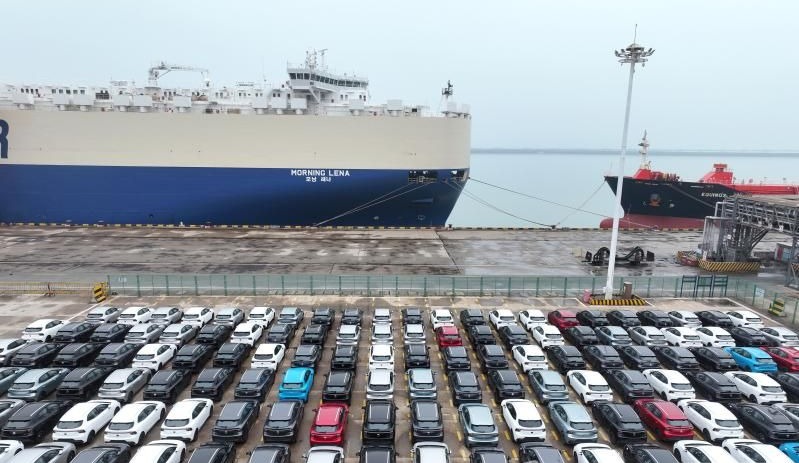
Given all of this, a reasonable working framework for the next 12–24 months looks roughly like this:
Majority ICE and hybrid stock (70–85 percent of inventory) for general market coverage across all three countries, particularly for buyers outside major metro areas, commercial and fleet operators without depot charging, and any market segment where resale liquidity matters more than novelty.
A focused, small EV allocation (10–20 percent), concentrated specifically in Casablanca, Rabat, Cairo, and Alexandria, targeted at urban, higher-income buyers who already have charging access — treat this as a test-and-learn segment rather than a volume play, and track resale times closely before scaling it up.
A hybrid buffer (5–15 percent) as the lowest-risk way to participate in the electrification trend without betting on charging infrastructure or unresolved customs treatment — this segment tends to hold value well across all three markets precisely because it doesn't depend on policy staying stable.
The riskiest move right now is treating any one country's policy environment as representative of the whole region. Egypt's customs treatment could look very different by the end of 2026; Algeria's EV market is still shaped more by what Geely and Chery build domestically than by what gets imported; Morocco's infrastructure buildout is real but still concentrated in a handful of cities. A supplier relationship that can flex sourcing quickly as these conditions shift — rather than one locked into a single product category — matters more than picking the "right" EV percentage today.
Companies like CarX Global, which operate warehouses in Guangzhou Nansha, Khorgos, Kashgar, and Qingdao, along with overseas showrooms in Dubai, Bishkek, and Tashkent, are positioned to support exactly this kind of mixed, flexible sourcing strategy — maintaining ICE, hybrid, and EV inventory simultaneously rather than betting on one category. Transactions are handled on EXW or FOB terms, meaning dealers get a transparent cost structure at the factory gate or departure port rather than a bundled logistics quote that obscures where costs actually sit. For dealers trying to build the kind of adaptive product mix described above, that transparency — knowing exactly what you're paying for at each stage — makes it considerably easier to model landed costs across gasoline, hybrid, and EV categories side by side. If you're working through a product-mix plan for the North African market, reaching out to CarX Global's regional team is a reasonable next step to compare current inventory availability across all three vehicle categories.

 Hot News
2026-09-17
2026-09-03
2026-08-25
2026-08-13
2026-08-07
2026-08-04

Ready to Source Quality Vehicles from China? Fill in Your Details & Get Started.
Office 1325, No. 355 Xingang East Rd,Pazhou, Haizhu District,Guangzhou, Guangdong, China 510000
Copyright © CarX Global All Rights Reserved | Privacy Policy
 EN
EN