One of the most common questions a dealer asks before placing a first order isn't about price — it's "how long until I actually have vehicles?" It's a fair question, and it's harder to answer precisely than most suppliers let on, because the export process runs through several distinct stages, each with its own realistic timeframe and its own points where delays creep in. Industry estimates put the export-side process — from confirmed order to the vessel leaving the departure port — at roughly 15 to 20 working days under normal conditions, with total door-to-destination-port timelines commonly running 40 to 60 days once ocean transit is included. This article breaks that window down stage by stage, so dealers can plan cash flow and inventory turnover with realistic expectations rather than a vague supplier promise.
The clock starts the moment a dealer confirms specifications and a deposit is made, but what happens next depends heavily on whether the requested vehicles are already in stock or need to be sourced against the order. For inventory already held in a supplier's warehouse, matching is largely a confirmation exercise — verifying VIN, mileage, and condition against what the dealer ordered, which can be completed in a few days. For custom orders built around specific make, model, year, and condition requirements, sourcing from the wider domestic used-car market can take longer, since it depends on auction cycles, regional availability, and how tightly specified the request is. Dealers working with suppliers that maintain multi-location warehouse networks — rather than a single lot — generally see faster matching, simply because there's a wider existing pool to draw from before anyone needs to go source something new.
This stage is also where a dealer should lock in the trade terms that will govern everything downstream. Under EXW terms, the dealer's responsibility begins at the supplier's warehouse gate; under FOB terms, the supplier's responsibility extends through to the vehicle being loaded aboard the vessel at the departure port. Confirming this upfront avoids confusion later about who is responsible for a delay at any given point in the chain.
Once vehicles are matched to an order, they move into pre-export compliance — typically the longest single stage before customs, running roughly 5 to 7 days. This covers mandatory inspection for accident history and mileage verification, along with issuance of the export license through Ministry of Commerce–authorized channels. Regulatory changes effective January 1, 2026 add a specific new checkpoint here: vehicles registered less than 180 days before applying for export must now come with a "Confirmation of After-Sales Repair Service" issued and stamped by the original vehicle manufacturer, covering the destination country, vehicle details, and overseas after-sales service outlets. Vehicles that can't produce this document are denied export licenses outright, which is a meaningful shift from the more flexible sourcing rules dealers may remember from prior years.
This is also when third-party inspection reports get generated — the documentation a dealer should be reviewing carefully before authorizing the next stage, since it's the last checkpoint where a condition dispute is cheap to resolve. Once a vehicle clears customs and is loaded, resolving a condition disagreement becomes far more expensive and time-consuming for everyone involved.
With inspection and documentation complete, the shipment moves into formal customs clearance, which for general cargo with complete documentation typically takes 1 to 3 working days at ports like Qingdao, Shanghai, or Guangzhou Nansha under the Single Window electronic filing system — though industry estimates for the full customs-clearance stage specific to vehicle exports, including document submission and tariff payment, more commonly run 3 to 5 days when accounting for the additional documentation vehicles require. Required paperwork at this stage includes the Used Car Export License, sales contract, commercial invoice, packing list, and the third-party inspection report from Stage 2, plus a Certificate of Origin where the destination market requires one — obtainable through the provincial or municipal China Council for the Promotion of International Trade (CCPIT).
Some ports have moved to streamline this further. Xi'an's one-stop service center for used car exports, built around the China-Europe Railway Express, has reduced enterprise tax processing time from roughly one month down to 2 to 3 days by consolidating vehicle registration, export transfer, customs clearance, and de-registration into a single facility — a useful illustration of how much clearance times can vary by port and by how well-integrated the local customs infrastructure actually is.
The final stage before FOB responsibility transfers covers cargo insurance activation, container loading or RoRo vessel booking, and physical loading at the departure port — generally estimated at 5 to 8 days. This is the stage where the shipping-method decision (container versus RoRo) directly affects timing: RoRo loading is typically faster since it skips the crane and consolidation steps that container loading requires, particularly when a shipment is being consolidated with other cargo rather than shipped as a dedicated load.
Once the vessel departs the port, FOB responsibility has been fulfilled on the supplier side. From here, transit time depends entirely on the destination — this is genuinely outside the export-side timeline and varies by shipping line, route, and season, which is why dealers should confirm current transit estimates for their specific destination port directly with their freight forwarder rather than relying on a single average figure.
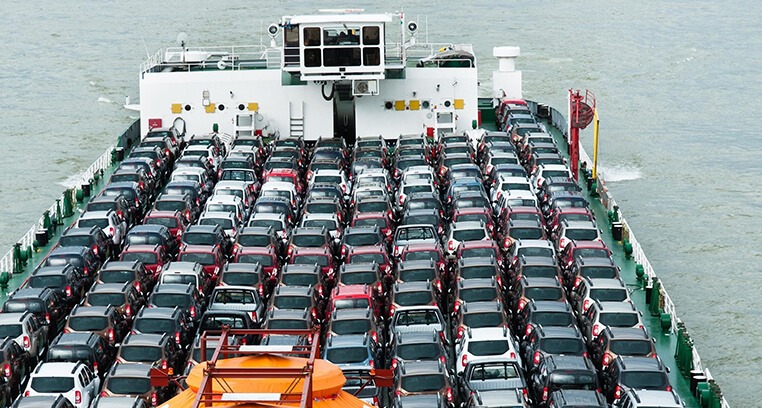
The gap between the roughly 15-to-20-working-day export-side timeline and the commonly cited 40-to-60-day total door-to-destination figure is almost entirely ocean transit, and this is the part that varies the most by market. Dealers new to sourcing from China sometimes assume the entire 40-to-60-day window reflects supplier inefficiency, when in reality the export-side portion is a relatively fixed and predictable segment, while ocean transit is a separate variable governed by shipping line schedules, port congestion at the destination, and seasonal demand for vessel space. Understanding which portion of the timeline your supplier actually controls — and which portion depends on the shipping line and destination port — is the single most useful mental model for setting realistic expectations with your own downstream customers.
A few points in this timeline are worth watching closely, because they're where realistic estimates most often slip. Incomplete or mismatched documentation is the most frequent cause of delay at the customs stage — a mismatch between the export license quantity and the actual customs declaration quantity, for instance, requires a new license application rather than a simple correction, adding days back onto the timeline. Vehicles falling under the new 180-day after-sales confirmation requirement introduced in 2026 face an additional dependency on the manufacturer issuing that document promptly, which is worth confirming before committing to a delivery date with an end buyer. Category A cargo requiring mandatory inspection under China's customs risk classification system will also run longer than Category C cargo that clears without additional review, so it's worth asking your supplier which inspection category your specific vehicle type typically falls under.
The practical takeaway for dealers is to build a buffer of roughly 3 to 5 extra working days into the export-side estimate for any first order with a new supplier, since first-time coordination on documentation tends to surface small mismatches that get resolved faster once a working relationship and document templates are established.
Putting the full picture together, a dealer placing a standard order should reasonably expect: order confirmation and vehicle matching in the first few days, inspection and compliance documentation over the following 5 to 7 days, customs declaration and clearance in 3 to 5 days, and port logistics and loading in a further 5 to 8 days — landing at roughly 15 to 20 working days from confirmed order to vessel departure under normal conditions. From there, ocean transit adds the remaining time to reach a total of 40 to 60 days door-to-destination-port on average, though this final leg should always be confirmed against the specific route and shipping line being used.
CarX Global operates on EXW and FOB terms across its Guangzhou Nansha, Khorgos, Kashgar, and Qingdao warehouses, which means the timeline described above — sourcing, inspection, documentation, customs clearance, and loading — is the portion of the process the company directly manages and can speak to with specificity, up to the point the vessel departs the port. Ocean transit and destination-side customs clearance fall to the dealer's freight forwarder and destination customs broker, consistent with the EXW/FOB structure rather than a door-to-door arrangement. For dealers planning a first order and trying to build a realistic cash-flow timeline, it's worth requesting a stage-by-stage estimate from the CarX Global team based on the specific vehicles and departure port involved, rather than relying on an industry-average figure alone.
 Hot News
2026-09-17
2026-09-03
2026-08-25
2026-08-13
2026-08-07
2026-08-04

Ready to Source Quality Vehicles from China? Fill in Your Details & Get Started.
Office 1325, No. 355 Xingang East Rd,Pazhou, Haizhu District,Guangzhou, Guangdong, China 510000
Copyright © CarX Global All Rights Reserved | Privacy Policy
 EN
EN