 EN
EN

Introduction
Import dealers evaluating new Chinese brands usually ask the same question first: is this manufacturer actually growing overseas, or just talking about it? For Changan, the numbers answer that clearly. The automaker's overseas sales reached 637,000 units in 2025, up 18.9% year-on-year, as part of total global sales of 2.913 million vehicles. For dealers weighing which Chinese brand to add to their portfolio in 2026, that trajectory — and the strategy behind it — is worth a closer look. Thairath
Changan's 2026 Growth Numbers, in Context
The scale of Changan's overseas push becomes clearer when you look at the three-year trend rather than a single year. Since launching its global strategy in 2023, the company's overseas sales climbed from 358,000 units that year to 536,000 in 2024 and 637,000 in 2025, for a combined 1.531 million units over three years. That is not a one-off spike tied to a single hot model or market — it is a sustained, multi-year build.
Momentum has continued into 2026. In the first quarter, Changan's overseas sales reached 212,585 units, accounting for 38.13% of its total sales, with March exports hitting a record high. By April, overseas sales had surged 69.9% year-on-year to 72,700 units, with NEV deliveries also up 32.2%. For a dealer, this pattern matters more than any single quarter's headline number: it shows a supplier that is consistently able to fulfill growing international demand rather than one riding a temporary export boom. Ichongqing
Why Now: The Domestic Slowdown Driving the Export Push
It helps to understand what is pushing Changan — and much of the Chinese auto industry — toward overseas markets so aggressively. Chinese retail passenger vehicle sales fell 18% year-on-year in the first four months of 2026, even as exports rose 52% to a recent high. Domestic price competition has intensified to the point where Changan's chairman has described the industry as entering a "survival of the strongest" phase expected to play out over the next three to five years in China.
That domestic pressure is a structural reason to expect continued — not temporary — investment in export markets. Manufacturers under margin pressure at home have a strong incentive to build durable overseas distribution networks rather than treat exports as a release valve for excess inventory. For dealers, that generally translates into more competitive wholesale terms, more responsive product support, and a manufacturer motivated to keep the relationship working.
What the "Vast Ocean Plan" Means for Regional Partners
Changan's export growth is not just about shipping more cars — the company has been explicit that its model is shifting. By the end of 2025, Changan had 22 production sites and 350,000 units of production capacity outside China, with its sales network covering 118 countries, and the company unveiled a "Vast Ocean Plan 2.0" moving from product exports and brand-building toward local partnerships. The new strategy calls for overseas growth to shift from simple vehicle exports to a fully localized supply chain covering manufacturing, trade, investment, services and ESG, with an overseas workforce expected to exceed 4,600 within three years and over 70% of those roles filled locally. MarkLines
For a regional distributor, this matters practically. A manufacturer investing in local capacity and long-term partnership structures — rather than opportunistic exports — is more likely to maintain parts availability, honor warranty commitments, and stay engaged in a market through a downturn. Dealers who build a relationship with Changan now are positioning themselves earlier in that localization curve, before local competition among distributors intensifies.
Product Fit: SUVs, Pickups and NEVs for Emerging Markets
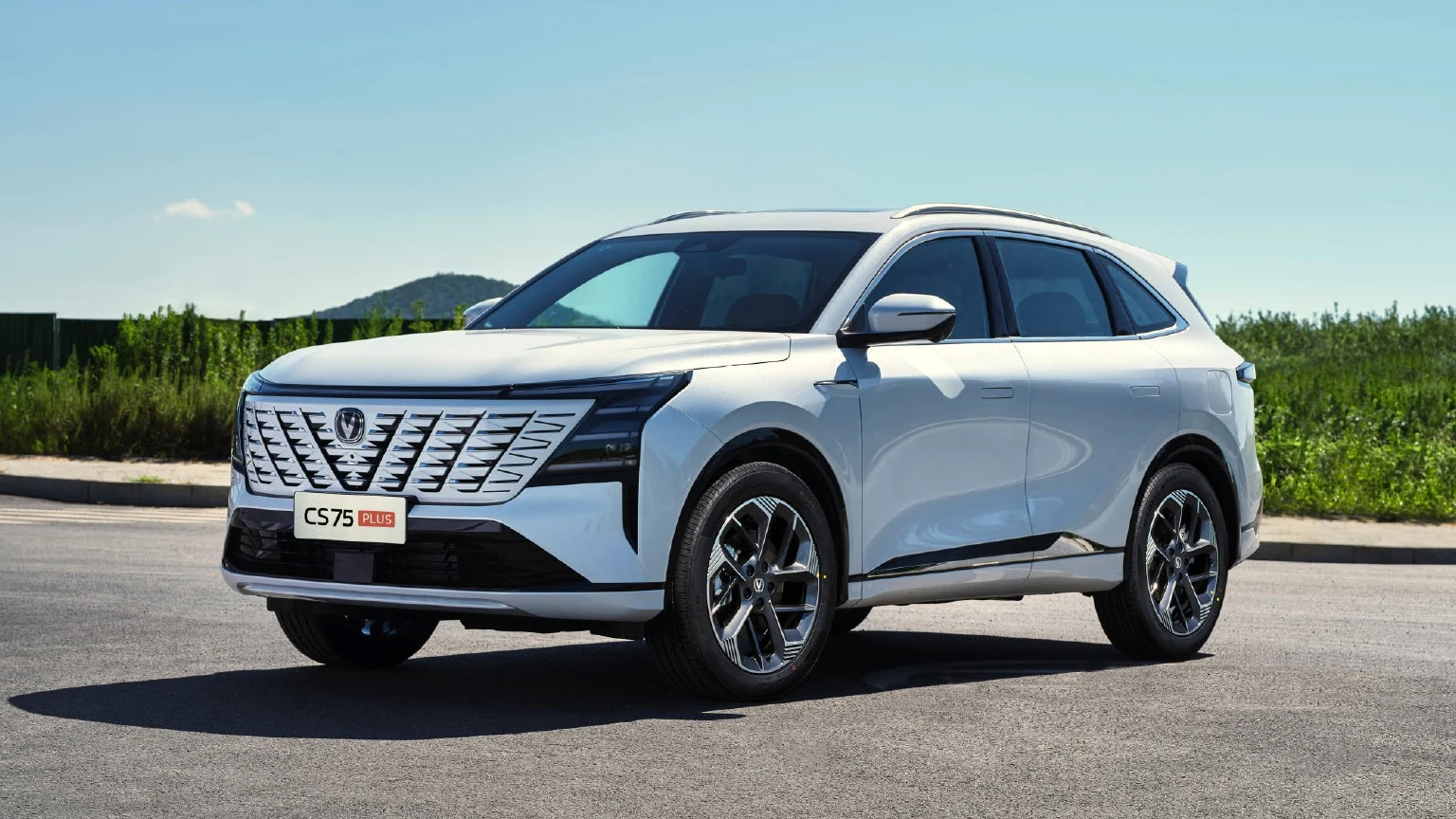
Product mix is where this strategy becomes concrete for dealers sourcing specific vehicle types. Changan's SUV range, led by models like the CS75 Plus, has built export volume on the strength of value-for-money positioning against established rivals — a factor that matters directly in price-sensitive markets across Africa and Central Asia. The Changan Hunter pickup line addresses a segment in steady demand across South America and parts of the Middle East, where light commercial and rugged utility vehicles move consistently regardless of passenger-car cycles.
On the new-energy side, Changan's NEV brands have shown strong momentum, with the Deepal brand alone selling over 200,000 cumulative units and its S05 model averaging more than 10,000 units per month. For dealers in markets where NEV import incentives or fuel-cost pressures are starting to shift buyer preference, having an established NEV sub-brand in the lineup — rather than a single experimental model — gives more flexibility to test demand without over-committing to one product. Ichongqing
What Dealers Should Watch Before Signing On
Growth numbers alone should not be the only input into a sourcing decision. A few practical points are worth flagging before committing to a new brand relationship.
First, regional performance is uneven — a brand's overall growth figure can mask sharp differences by market. In the Middle East specifically, Changan's shipments dropped in the first five months of 2026 even as several competitors grew, in a market that industry analysts describe as entering a structural adjustment phase. That does not mean the brand is a poor fit for the Middle East long-term, but it is a reminder to ask any supplier or trading partner for market-specific shipment data, not just global totals, before setting order volumes. Gasgoo
Second, tariff and trade-policy exposure varies significantly by destination and continues to shift. Dealers importing into the EU or markets with EV-specific tariffs should confirm current duty structures before finalizing NEV orders, since policy in this area has moved more than once in the past two years. Third, confirm production origin and factory documentation for any given order — Changan's expanding local-assembly footprint means the same model may now ship from more than one country of origin, which can affect certificates of conformity and homologation paperwork.
How to Source and Verify Changan Vehicles Reliably
None of the above should discourage dealers from evaluating Changan seriously — it is a practical checklist, not a warning sign. The more useful question is how to source through a channel that reduces the usual friction of buying from a Chinese manufacturer at arm's length.
A few due-diligence steps apply regardless of which trading partner a dealer works with: confirm the exporter can provide factory-issued documentation and certificates of conformity for the destination market, check whether the exporter has verifiable warehouse or inspection facilities rather than operating purely as a broker, and ask for references from dealers already importing the same model line into a comparable market. Exporters with established physical infrastructure — bonded warehouses near the export border, or showroom presence in the destination region — tend to offer more transparency on inventory and lead times than purely transactional trading companies.
This is also where trade terms matter for planning. Working with a supplier on FOB terms gives a dealer a clear, auditable cost baseline at the port of loading, with shipping and destination clearance handled separately and transparently — rather than a bundled quote that obscures where costs actually sit.
Outlook: Where This Growth Is Headed Next
Changan's own targets suggest this is an early stage rather than a peak. The company is targeting 3.3 million total sales in 2026, including 750,000 units sold abroad, with a longer-term goal of ranking among the top 10 global automotive brands by 2030 and international markets representing more than 35% of sales. Longer term, Changan has set a 2030 target of 5 million total units, with 30% of NEV sales coming from overseas markets. ThairathMarkLines
For dealers deciding whether to add a brand now versus waiting, that trajectory is the relevant data point: manufacturers tend to offer more favorable partnership terms while building out a market than after distribution networks are already saturated with competing dealers. Getting in during this expansion phase — rather than after it plateaus — is typically when the terms are most negotiable.
Closing
Sourcing decisions like this ultimately come down to the reliability of the channel a dealer buys through, not just the manufacturer's brand momentum. CarX Global has been sourcing and exporting Chinese vehicles — including Changan models — to dealers across Nigeria, Algeria, the Middle East, Central Asia and South America, working from warehouse facilities in Guangzhou Nansha, Khorgos, Kashgar and Qingdao. The company operates on EXW and FOB terms, which means dealers get a transparent cost baseline at the factory or port of loading rather than a bundled quote that hides where costs actually sit. CarX Global also maintains overseas showrooms in Dubai, Bishkek and Tashkent, giving regional buyers a chance to see inventory in person before committing to an order. For dealers evaluating Changan or other Chinese brands for the first time, that combination of documented sourcing and regional presence is often what separates a smooth import process from a costly one. If you'd like to discuss current Changan inventory or shipping terms, CarX Global's regional team can walk through options for your market.
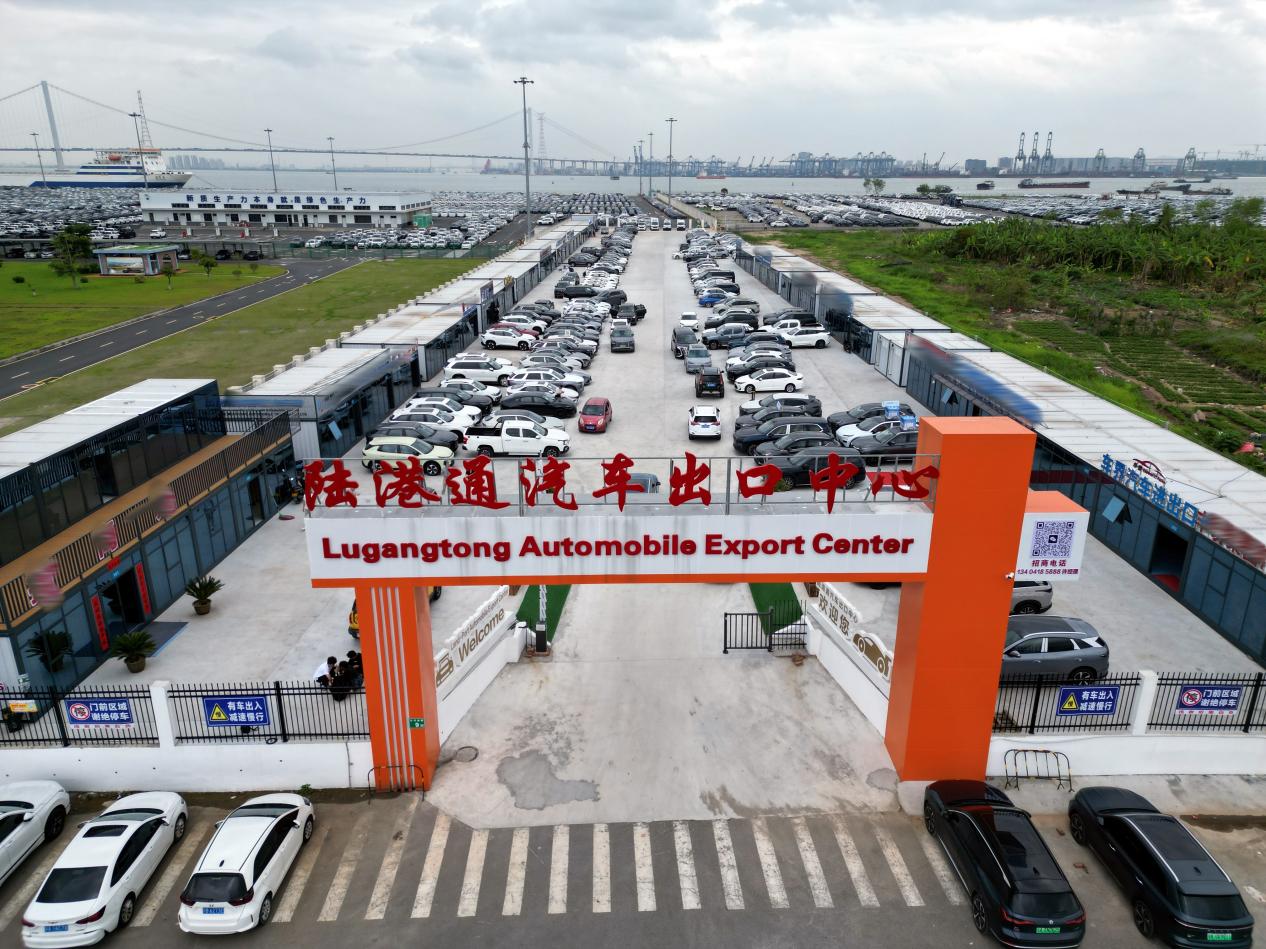
Table of Contents
- Introduction
- Changan's 2026 Growth Numbers, in Context
- Why Now: The Domestic Slowdown Driving the Export Push
- What the "Vast Ocean Plan" Means for Regional Partners
- Product Fit: SUVs, Pickups and NEVs for Emerging Markets
- What Dealers Should Watch Before Signing On
- How to Source and Verify Changan Vehicles Reliably
- Outlook: Where This Growth Is Headed Next
- Closing
